
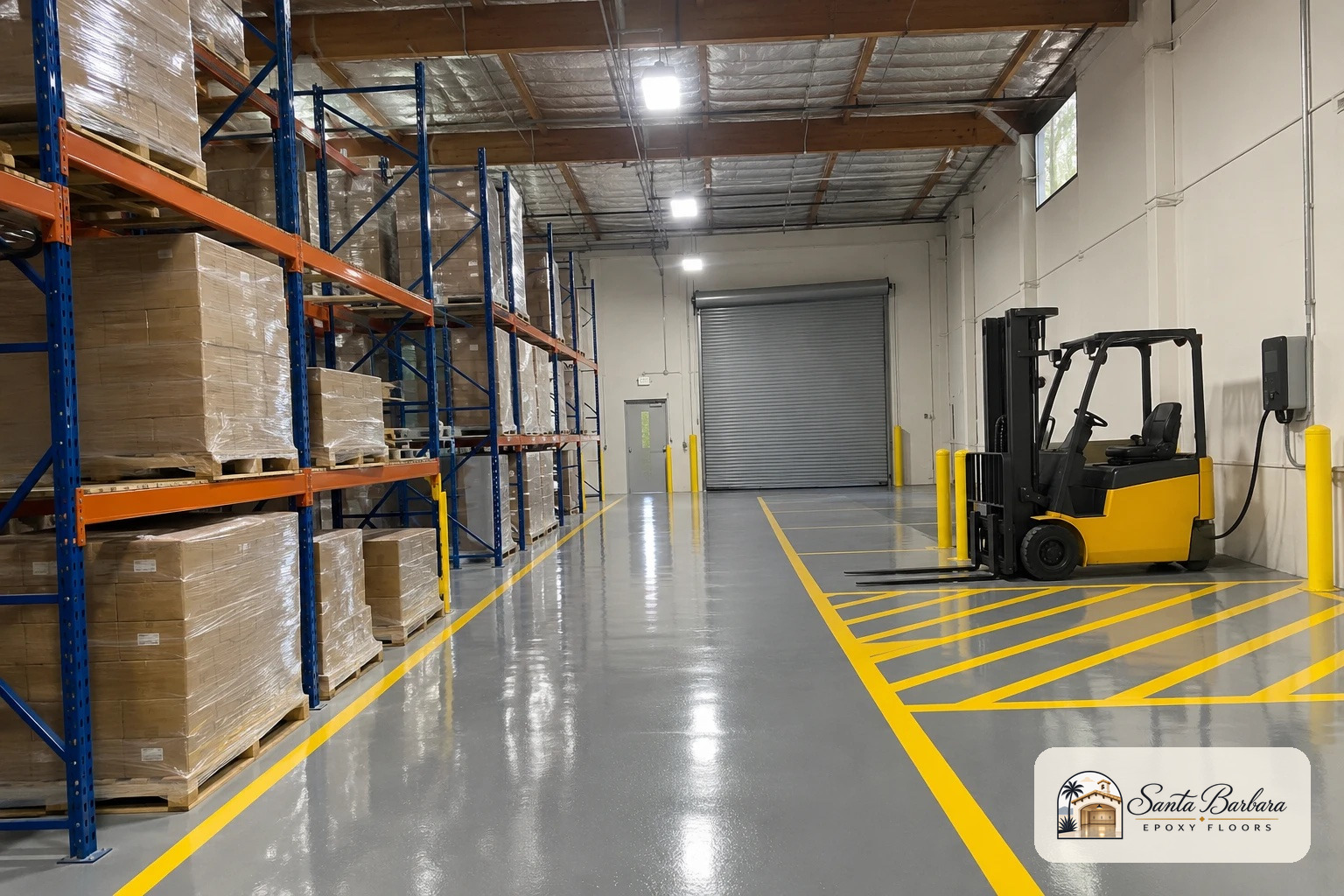
Warehouse & Industrial Epoxy Floors in Santa Barbara
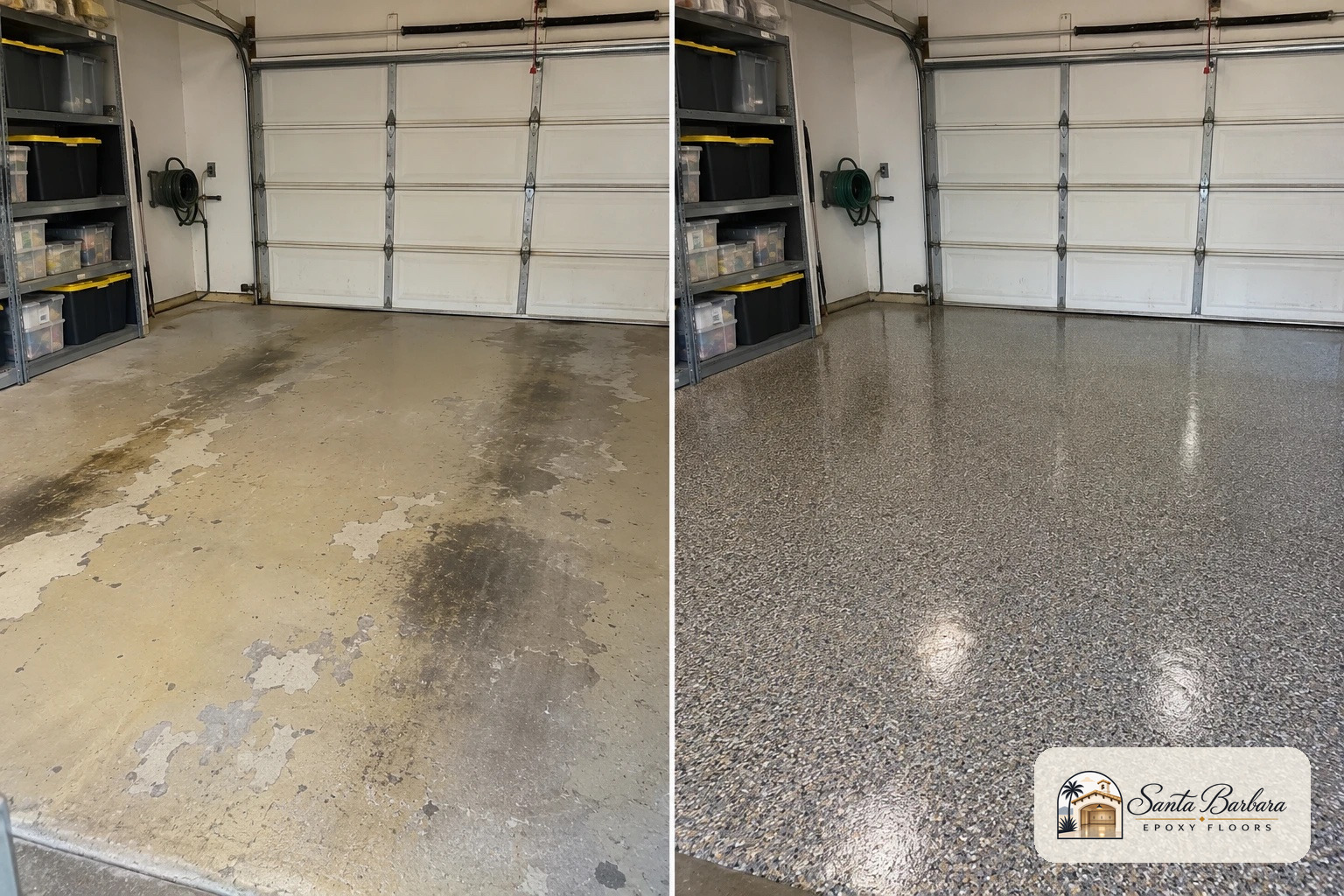
Bare concrete in a working building dusts, soaks up oil and breaks down under steel wheels. From Goleta's light-industrial parks to Santa Barbara's service yards, a coated floor is easier to sweep, scrub and inspect, and it brightens the space.
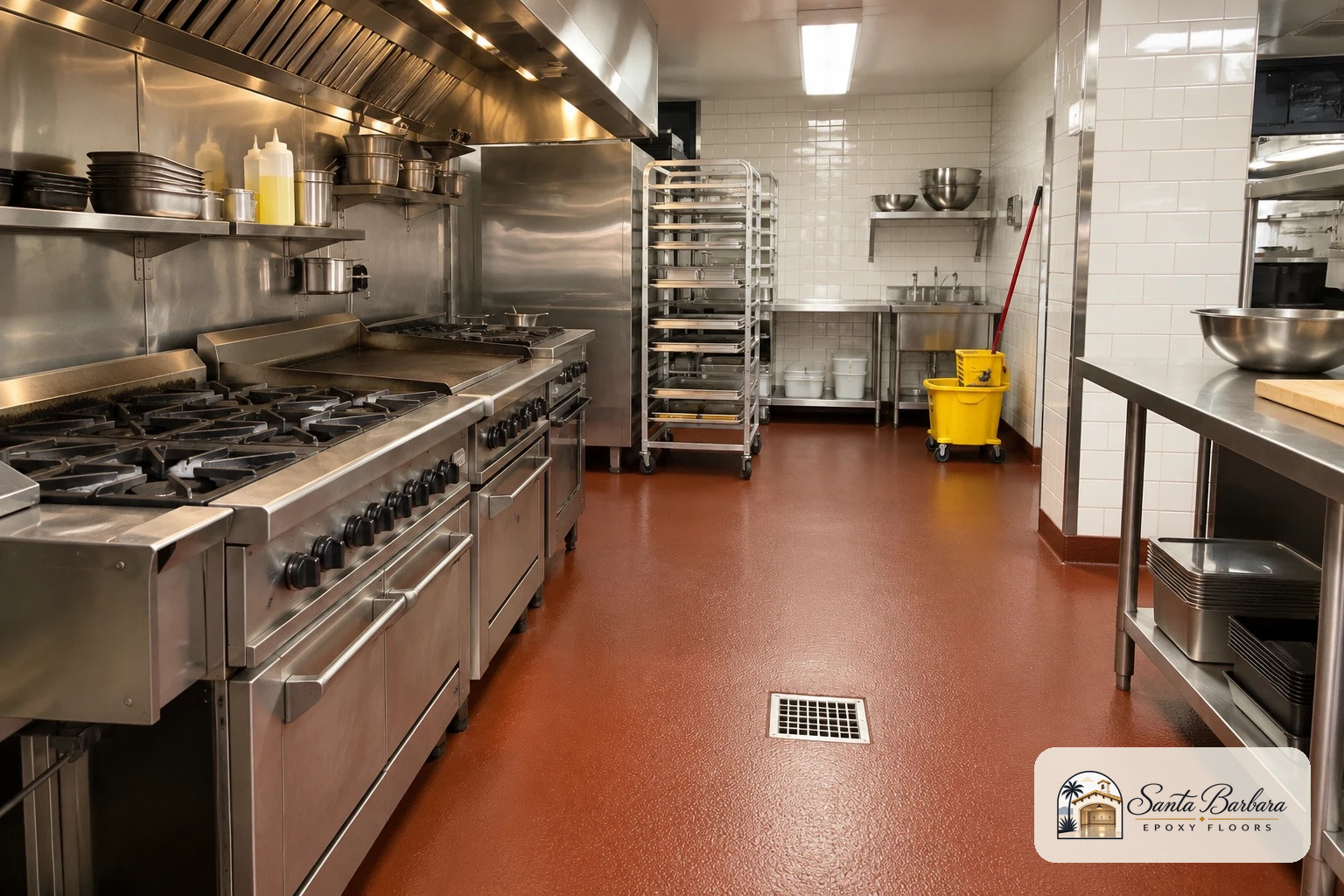
Not every part of a facility wears the same way, so we plan by zone: thicker, abrasion-resistant builds in forklift lanes and turning areas, chemical-resistant novolac epoxy at battery charging, urethane cement or textured polyaspartic at loading docks, and non-porous systems in maintenance bays.
Near the shoreline, water tables run high and humidity is constant. Moisture testing and, where needed, a mitigation primer are part of every industrial job.
What's Included
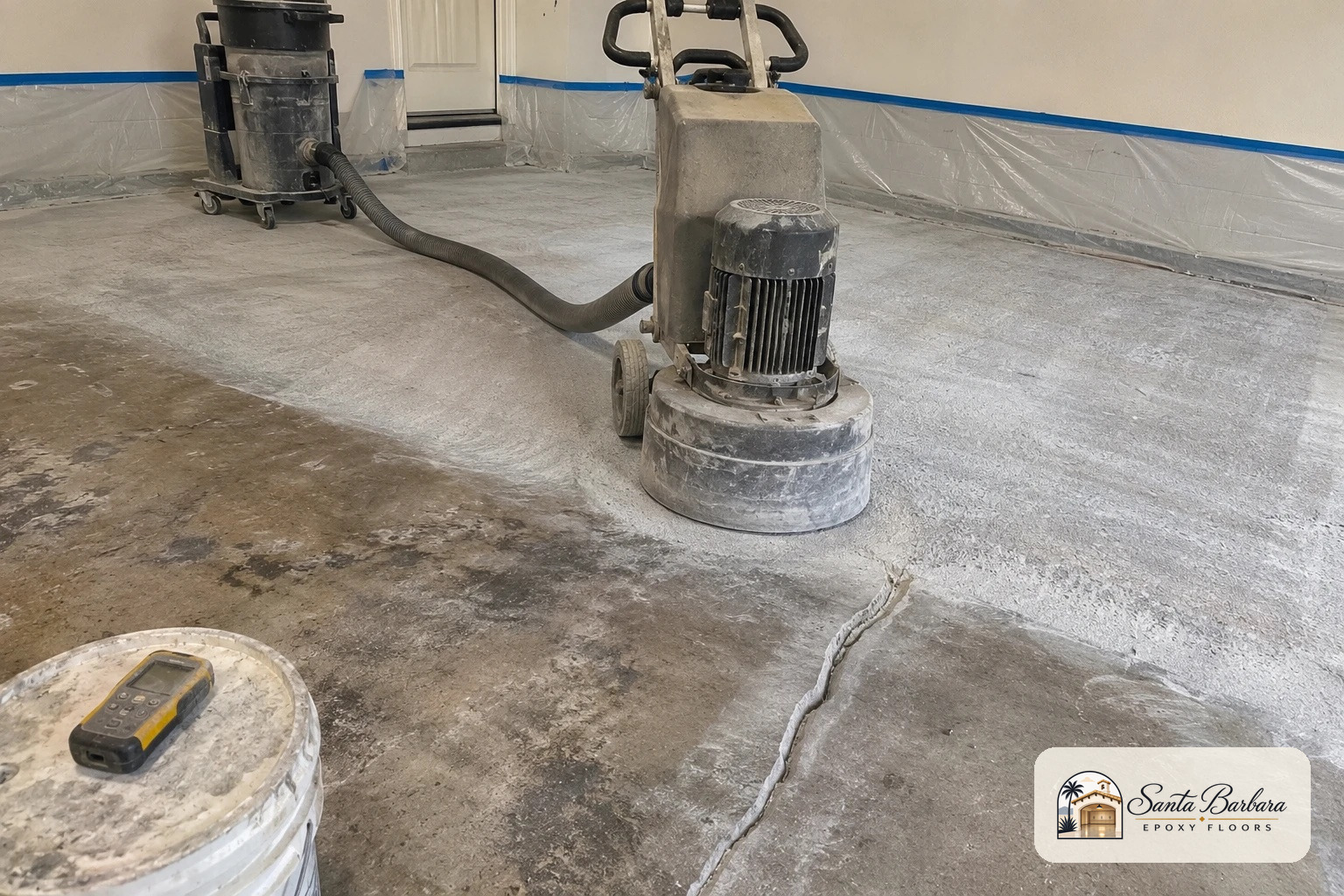
- Diamond grinding with dust collection
- Joint and crack repair before coating
- Moisture testing and mitigation primer where needed
- High-build epoxy or urethane cement by zone
- Safety lanes, hatched zones and markings coated in
- Scheduled recoating plans for high-wear areas
Who It's For
Warehouses and distribution
Forklift lanes built thick where tires turn.
Manufacturing and labs
Chemical-resistant zones where spills happen.
Shops and maintenance bays
Oil- and solvent-resistant, easy to clean.
How We Install Warehouse & Industrial Floors
Step 1: Zone the floor
We map traffic, loads, chemicals and docks.
Step 2: Prep
Grind, repair joints and test moisture.
Step 3: Coat by zone
The right system and thickness for each area.
Step 4: Stripe
Lanes and markings built into the coating.
Warehouse & Industrial Floors FAQs
Can you work around operations?
Yes. We phase industrial floors by area so part of the building stays in use.
Where do industrial floors wear first?
Turning zones, because tires twist against the surface. We build them thicker and recommend recoating before the base coat shows.
Why test moisture on an old slab?
Moisture vapor rising through a slab is a leading cause of coatings blistering and peeling. Coastal slabs often run high.